15 Hard-to-Kill Low Light Plants for Dark Apartments in 2026 (The Ultimate Guide)

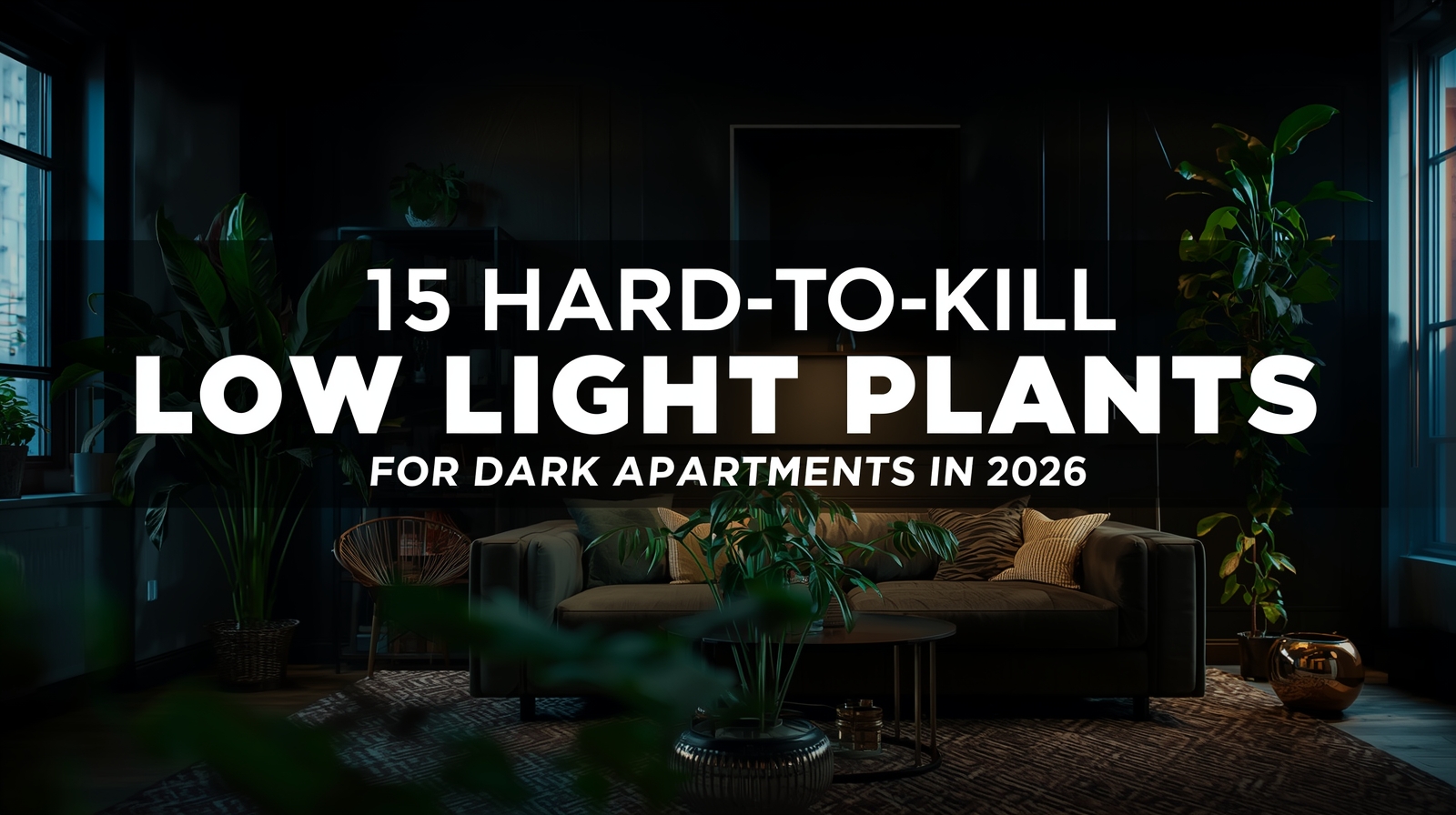
The modern urban dwelling faces a crisis of illumination. As we move further into the decade, with micro-apartments and high-density housing becoming the standard in 2026, millions of renters are finding themselves living in what botanists affectionately call “caves.”
If you have ever brought home a vibrant fern only to watch it turn into a crispy brown skeleton three weeks later, you are not alone. The vast majority of “houseplant guides” lie to you. They show photos of plants next to floor-to-ceiling windows bathed in direct sun. That is not reality for the average studio apartment.
But a lack of sun does not mean a lack of green.
This is not just a list; this is a survival guide. We have curated the definitive roster of 15 Hard to kill low light Plants for Dark Apartments. These are the botanical survivors—the species that evolved on the forest floors of the tropics, fighting for scraps of sunlight, developing biological mechanisms to thrive in the shadows.
From the indestructible “Iron Plant” to the 2026 trend-setting “Raven ZZ,” here is how to turn your dark apartment into a lush sanctuary this year.
🔬 The Science: What Does “Low Light” Actually Mean?
Before we buy, we must diagnose. In the world of horticulture, “Low Light” is a specific technical measurement, not just a vibe.
The “Read a Book” Test
Forget buying an expensive light meter. The standard test for 2026 remains analog: Stand different distances from your window at noon.
- High Light: The sun hits your skin and feels warm. Shadow boundaries are sharp.
- Medium Light: You can read a book comfortably, but there is no direct heat. Shadows are soft and blurry.
- Low Light: You can read a print book, but your eyes strain slightly. You stick your hand out, and it casts a faint, barely visible shadow.
- No Light: You cannot read without a lamp. Note: No plant survives in zero light. If you are in a windowless bathroom, you will need the supplemental grow lights discussed in Section 4.
Standard Low Light Definition: A spot more than 7 feet away from a South/West window, or right next to a North-facing window (in the Northern Hemisphere).
🛡️ PART 1: The “Indestructibles”
(Best for Complete Beginners & Frequent Travelers)
These plants are more than just hardy; they are biologically engineered to withstand neglect. If you kill these, it was likely an act of aggression.
1. The Cast Iron Plant (Aspidistra elatior)
The “Victorian Survivors”
There is a reason this plant was a staple in Victorian-era England: it was the only thing that survived the coal smog and gas fumes of London homes.
- The Look: Broad, strappy, dark, evergreen leaves that shoot directly from the soil, reaching about 2-3 feet tall.
- Why It Wins in 2026: It is immune to temperature fluctuations. Is your apartment drafty? Do you blast the AC? The Cast Iron plant does not care.
- The “Kill Switch”: Frequent repotting. This plant hates having its roots disturbed. Buy it, put it in a corner, and ignore it for five years.
- Light Needs: Truly low. It practically grows in the dark.
2. The ZZ Plant (Zamioculcas zamiifolia)
The “Statuesque Sculpture”
If plastic plants had a soul, they would be ZZ plants. Native to Eastern Africa, the ZZ has evolved a survival mechanism: rhizomes. These potato-like tubers under the soil store massive amounts of water.
- The 2026 Trend: Look for the ‘Raven’ ZZ. This variety starts green but matures into a stunning, deep purple-black. In a minimalist white apartment, a black plant is a design masterpiece.
- Why It Wins: You can leave for a month-long vacation, come back, and it will look exactly the same. It is slow-growing but steady.
- The “Kill Switch”: Water. If you water this more than once a month, you will rot the rhizomes. Neglect is love.
3. The Snake Plant (Dracaena trifasciata)
The “Bedroom Oxygenator”
Formerly known as Sansevieria, the Snake Plant is the king of low light. Its architectural, sword-like leaves make it perfect for narrow spaces.
- The Science (CAM Photosynthesis): Most plants absorb oxygen at night. The Snake Plant releases oxygen at night. This makes it the #1 recommended plant for bedrooms to improve sleep quality.
- Varieties to Watch:
- Laurentii: The classic green with yellow edges.
- Moonshine: A pale, silvery-green ghostly variety that reflects light, brightening up dark corners.
- Care Note: This succulent stores water in its leaves. It prefers dry, gritty soil.
🌿 PART 2: The Vining & Hanging Plants
(For Bookshelves, Vertical Space & Softening Hard Angles)
In small apartments, floor space is premium real estate. The 2026 design trend is “Vertical Gardening”—using walls and ceilings.
4. Heartleaf Philodendron (Philodendron hederaceum)
The “Romantic Trailer”
Often confused with Pothos, the Philodendron is softer, more matte, and surprisingly hardier in true shade.
- The Look: Perfect, heart-shaped leaves that cascade down vines. It creates a “living curtain” effect.
- Communication: This plant talks to you. When it is thirsty, the leaves curl slightly inward. Give it a drink, and they perk up in an hour.
- Styling Tip: Place a pot on top of your kitchen cabinets. The vines will grow down towards the counter, softening the sterile lines of built-in cabinetry.
5. Golden Pothos (Epipremnum aureum)
The “Devil’s Ivy”
It earned the nickname “Devil’s Ivy” because it is nearly impossible to kill and stays green even in the dark.
- Speed: This is the racer. In proper conditions, it can grow inches per week. Perfect for renters who want “instant gratification jungle vibes.”
- The Variegation Factor: In high light, it has yellow streaks. In low light, it reverts to solid Jade green to maximize photosynthesis.
- Propagation: Snip a vine, put it in a glass of water, and it roots. You can turn one $20 plant into ten plants within a year.
6. Satin Pothos (Scindapsus pictus)
The “Glittering Gem”
Technically not a pothos, but a close cousin. This is for the renter who wants something more sophisticated.
- The Texture: The leaves are matte velvet green with splashes of metallic silver. In a dark room, these silver patches actually reflect ambient light, making the plant seem to “glow.”
- Care Difference: It hates wet feet even more than the Golden Pothos. wait until the leaves physically curl before watering.
7. English Ivy (Hedera helix)
The “Cold Room Specialist”
Most tropical plants hate cold drafts. English Ivy loves them.
- The Use Case: Perfect for that drafty windowsill in the bathroom or an uninsulated entryway.
- The Warning: Ivy is a magnet for spider mites if the air is too dry. You must mist it or keep it in a humid environment (like a bathroom) for it to thrive indoors.
🌴 PART 3: The “Statement Pieces” (Floor Plants)
(Big Impact, Low Footprint)
You don’t need a sofa to fill a corner. A large plant adds life and height.
8. Parlor Palm (Chamaedorea elegans)
The “Victorian Elegance”
If you want to feel like you are living in a 1920s hotel lobby, this is your plant.
- Why It Fits Apartments: Unlike majestic outdoor palms, the Parlor Palm grows slowly and stays compact. It won’t hit your ceiling overnight.
- Light: It adapts remarkably well to “North Window” light. Direct sun will actually scorch and kill it. It wants the shadows.
- Pet Safe: One of the few palms that is 100% non-toxic to curious cats.
9. Corn Plant (Dracaena fragrans)
The “Tree Lookalike”
A thick, woody cane trunk with a burst of strap-like leaves at the top. It looks like a tropical tree but acts like a cactus.
- The Space Saver: It grows vertically, not horizontally. You can fit a 6-foot tree in a 1-foot square of floor space.
- The Mass Cane: Often sold as “Mass Cane,” you can find huge specimens at hardware stores for under $30. Best ROI (Return on Investment) for size.
10. Rubber Plant (Ficus elastica ‘Burgundy’)
The “Moody Gothic”
While Ficus usually crave sun, the ‘Burgundy’ variety is surprisingly tolerant of medium-low light (unlike the Ficus Lyrata/Fiddle Leaf, which will die in your apartment).
- The Vibe: The leaves are so dark green they appear black. Detailed with a red vein, they are thick, glossy, and leathery.
- Care: Be careful not to overpot. They like tight shoes (small pots).
11. Peace Lily (Spathiphyllum)
The “Drama Queen”
The only plant on this list that gives you flowers in low light.
- The Communicator: When the Peace Lily is thirsty, it collapses flat on the floor. It looks dead. You water it, and 30 minutes later, it is standing tall again. It is incredibly satisfying.
- Air Purification: NASA specifically listed the Peace Lily as a top scrubber of mold spores and formaldahyde from the air. Excellent for damp basements.
🌸 PART 4: The Unique & Colorful Options
(Breaking the “Green Boring” Myth)
Low light doesn’t mean you are stuck with just green leaves.
12. Chinese Evergreen (Aglaonema)
The “Patterned Painter”
Aglaonemas are the unsung heroes of 2026. Breeders have created varieties in shocked pink, red, and speckled white.
- Resistance: They are almost as tough as Snake Plants but much bushier.
- The Rule: The darker the leaf, the less light it needs. If you buy a bright pink one, it needs medium light. If you buy a dark green/silver one, it handles low light.
13. Prayer Plant (Maranta leuconeura)
The “Moving Art”
- The Behavior: At night, the leaves fold up vertically like hands in prayer. In the morning, they unfold to catch the light.
- The Needs: This plant needs humidity. Do not put it near a radiator. It is the perfect companion for the bathroom shelf.
14. Lucky Bamboo (Dracaena sanderiana)
The “Soil-Free Solution”
- The Hack: You don’t even need dirt. You can grow this in a vase of water with pebbles.
- Feng Shui: It is traditionally used to bring energy flow to dark, stagnant corners of a room. Change the water every 2 weeks, and it lives forever.
15. Spider Plant (Chlorophytum comosum)
The “Gift That Keeps Giving”
- Propagation: Once happy, it shoots out long arched stems with “babies” (pups) hanging off the end. You can cut these off and plant them. One plant becomes 50.
- The Look: Messy, grassy, and vibrant. It adds a wild texture to organized shelves.
☠️ 3 Rules to Keep Them Alive (The Secret Sauce)
If you take nothing else from this article, memorize these three laws of low-light gardening.
1. The Photosynthesis Equation
Light is energy. Water is fuel.
- High Light = High Energy = Plant burns fuel fast = Water often.
- Low Light = Low Energy = Plant sits idle = Water rarely.
- The Mistake: People water their low-light plants on the same schedule as their sunny plants. That causes root rot. In the shade, soil takes 2-3x longer to dry out. Touch the soil. If it’s damp, walk away.
2. The Dust Barrier
In low light, every photon counts. A layer of household dust on a leaf blocks up to 30% of the light.
- The Fix: Wipe your leaves with a damp microfiber cloth once a month. It’s like taking the sunglasses off your plant.
3. The Rotation Ritual
Plants in dark rooms will desperately stretch toward the one window (phototropism). This makes them lean and eventually tip over.
- The Fix: Rotate the pot a quarter turn every time you water. This ensures even growth on all sides.
🛑 Stop Guessing, Start Growing.
Are you terrified of Overwatering vs. Underwatering?
We have digitized the care instructions for all 15 plants listed above. Get the About Home Garden Digital Care Planner.
- ✅ Visualize exact watering schedules.
- ✅ Track your fertilization.
- ✅ Identify pest problems before they spread.
[👉 Download the Digital Planner Here]
Compatible with GoodNotes & Notion.
🐾 Cheat Sheet: Are They Safe for Pets?
If you have a cat that chews everything, check this table before buying.
| Plant Name | Toxic to Cats/Dogs? | Symptoms |
|---|---|---|
| Cast Iron Plant | ✅ SAFE | N/A |
| ZZ Plant | ❌ TOXIC | Vomiting, irritation |
| Snake Plant | ❌ TOXIC | Nausea, lethargy |
| Heartleaf Philo | ❌ TOXIC | Oral irritation |
| Pothos (All) | ❌ TOXIC | Oral irritation |
| Parlor Palm | ✅ SAFE | N/A |
| Rubber Plant | ❌ TOXIC | Skin irritation, vomiting |
| Peace Lily | ❌ TOXIC | Mouth burning, drooling |
| Chinese Evergreen | ❌ TOXIC | Irritation |
| Prayer Plant | ✅ SAFE | N/A |
| Spider Plant | ✅ SAFE | Mild hallucinogen for cats (makes them high, but safe) |
🏁 Final Verdict: Which One Should You Buy First?
If you are standing in the garden center right now, overwhelmed by choices, here is our tailored recommendation:
- The “I traveled for work and forgot I had plants” Award: Go with the ZZ Plant. It thrives on neglect.
- The “My apartment is a basement dungeon” Award: Go with the Snake Plant or Cast Iron Plant.
- The “I want it to look good on Instagram” Award: Go with the Satin Pothos or Rubber Plant.
Your dark apartment has potential. It doesn’t need a remodel; it needs life. Start with one of these hard-to-kill varieties this week, and watch how the entire energy of your space shifts.
Happy growing.
Read Next:
- [7 Non-Toxic Low Light Plants Safe for Cats and Dogs]
- [The 2026 Guide to Grow Lights for Apartments with No Sun]
- [How to Propagate Pothos in Water: A Beginner’s Guide]
Related Articles


About the Author

8 Comments
https://shorturl.fm/KJdgU
https://shorturl.fm/9BQl5
https://shorturl.fm/zXGcV
https://shorturl.fm/JWDQX
https://shorturl.fm/Fopjg
https://shorturl.fm/81DEK
https://shorturl.fm/05eoG
https://shorturl.fm/W1ko1