7 Non-Toxic Low Light Plants Safe for Cats and Dogs (2026 List)

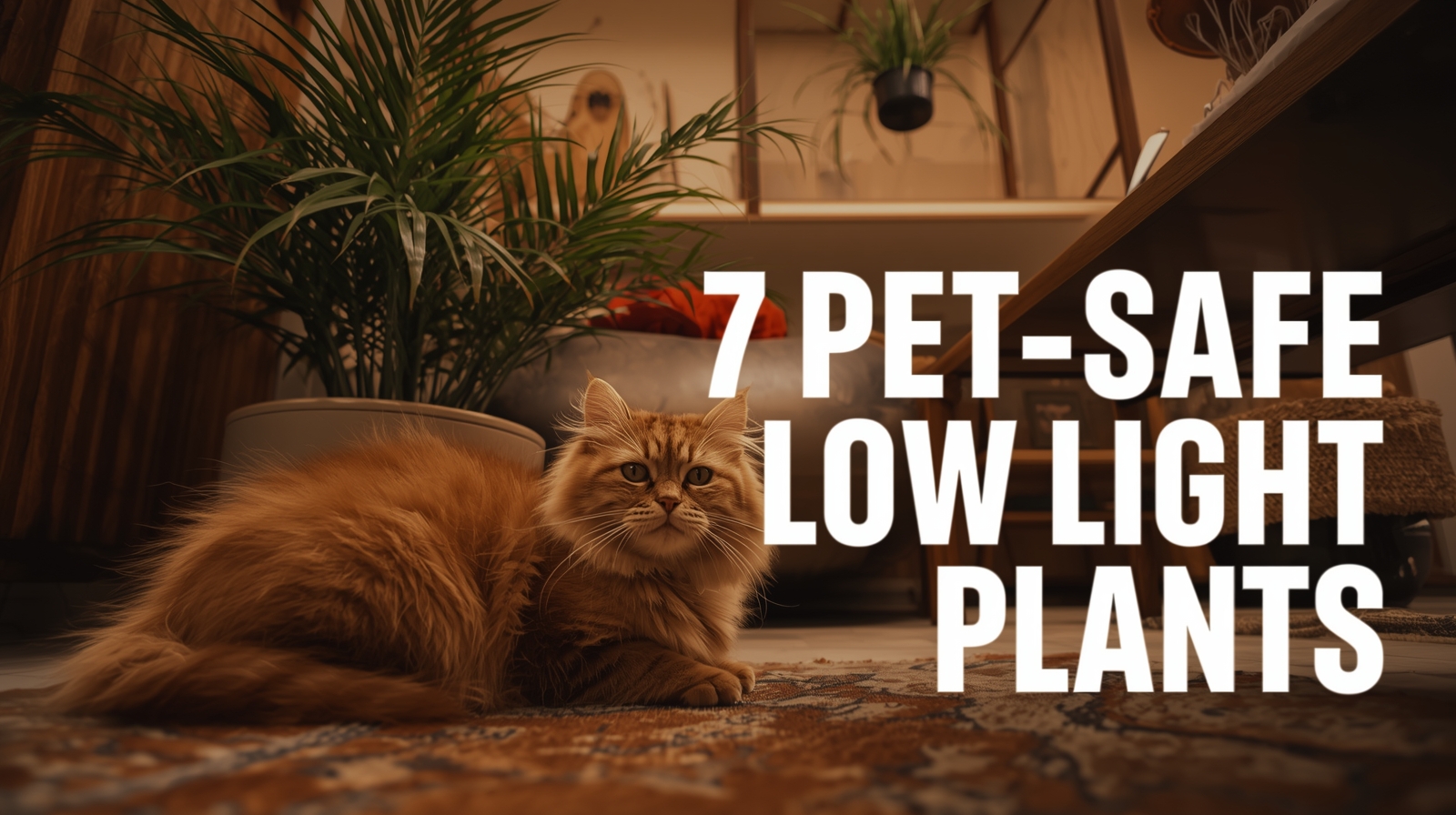
Turning your apartment into an indoor jungle is the dream. But for pet parents, that dream can quickly turn into a nightmare visit to the emergency vet.
Cats investigate with their mouths. Dogs dig with their noses. Unfortunately, some of the most popular low-light plants (like the Snake Plant or Pothos) are toxic if ingested.
If you are looking to build a massive collection, we recommend you start with our [Comprehensive Guide to 15 Hard-to-Kill Low Light Plants for Dark Apartments]. However, if you have a curious tabby or a bored puppy, you need to filter that list down strictly to the non-toxic survivors.
Here are the 7 Non-Toxic Low Light Plants Safe for Cats and Dogs that allow you to grow a lush garden without risking your best friend’s health.
⚠️ Why Are Some Plants Dangerous?
Before we get to the safe list, it helps to know the enemy. Most “toxic” houseplants (like Philodendrons and Monsteras) contain Calcium Oxalate Crystals.
Microscopically, these look like tiny glass shards. When a cat bites the leaf, these crystals shoot into their mouth and throat, causing intense burning, drooling, and vomiting. The plants below do not have these crystals. They are biologically distinct and safe for digestion.
1. The Spider Plant (Chlorophytum comosum)
** The “Catnip” Alternative**
If there is one plant that bridges the gap between resilient and safe, it is the Spider Plant.
- Why Pets Love It: Spider plants contain mild hallucinogenic compounds similar to catnip. You might find your cat staring at it or gently chewing the tips.
- The Safety Verdict: Totally non-toxic. It might make your cat act a bit goofy or result in an upset stomach if they eat the whole thing (due to fiber), but it won’t poison them.
- Low Light Ability: Excellent. It thrives in north-facing windows or on top of bookshelves.
2. The Parlor Palm (Chamaedorea elegans)
The Pet-Safe Tropical
Most tropical palms are tricky indoors, but the Parlor Palm is the exception.
- The Look: Feathery, arching fronds that bring instant “Victorian Hotel” vibes to your living room.
- The Risk: The swaying leaves look like feather toys to cats. While safe to eat, you might want to place this on a plant stand just so your cat doesn’t shred it to pieces out of boredom.
- Care: Needs very little light, but hates “wet feet.” Let it dry out completely.
3. The Cast Iron Plant (Aspidistra elatior)
The Indestructible Shield
We mentioned this in our [Main Guide to Hard-to-Kill Plants], but it deserves the top spot here too.
- Why It Wins: It is virtually immune to physical damage. Large dogs can wage tail-wagging wars against this plant, and the thick, leathery leaves won’t break.
- Toxicity: Zero. It is widespread in Japan where it is used in cooking presentation (bento boxes) because it is food-grade safe.
- Growth: Very slow. Buy a large one if you can afford it, as it won’t grow much in a dark corner.
4. The Prayer Plant (Maranta or Calathea)
The Moving Foliage
Calatheas are famous for their stunning patterns (rattlesnake stripes, pinstripes), and they are 100% pet-safe.
- The “Prayer”: The leaves fold up at night. This movement can sometimes startle pets, but it creates a dynamic relationship with your room.
- Warning: Unlike the Cast Iron plant, Calatheas are dramatic about water. They need distilled water. If you give them tap water, the edges turn brown.
- Safe for: Cats, Dogs, and even Reptiles.
5. Baby Rubber Plant (Peperomia obtusifolia)
The “Succulent” Copycat
Important distinction: The true Rubber Tree (Ficus elastica) is toxic. The Baby Rubber Plant (Peperomia) is NOT related and is incredibly safe.
- Texture: It has thick, fleshy leaves that feel like a succulent.
- Size: Perfect for desktops, coffee tables, or low shelves. It stays compact and doesn’t vine out.
- The Pet Appeal: Because the leaves are thick and snap easily, some dogs like the “crunch.” It is harmless, but try to keep it out of snout range.
6. Boston Fern (Nephrolepis exaltata)
The Shaggy Hanging Friend
Ferns are hit-or-miss for toxicity (never buy an Asparagus Fern), but the true Boston Fern is a safe classic.
- Placement: The best way to keep this safe from pets is to hang it. Ferns look best in macramé hangers suspended from the ceiling.
- The Bathroom Strategy: Ferns need humidity. The safest specific place for a Boston Fern is hanging in the shower window. Your cats can’t reach it, and the steam keeps it lush.
7. Polka Dot Plant (Hypoestes phyllostachya)
The Pop of Color
If you are bored of green, this plant comes splashed in neon pink, red, or white.
- Low Light Tolerance: Moderate. In very dark corners, it might lose its spots and turn green (to absorb more light). It prefers a medium-light spot.
- Safety: Non-toxic to all pets.
- Growth: It grows fast and can get “leggy.” Don’t be afraid to trim it back with scissors; it encourages bushier growth.
🚫 The “Danger Zone”: Popular Plants to AVOID
If you are pet-proofing your apartment, do not buy these, even though they appear on many low-light lists:
- Snake Plant (Sansevieria): Toxic. Causes nausea.
- Pothos (Devil’s Ivy): Toxic. Causes mouth burning.
- ZZ Plant: Toxic. Causes vomiting.
- Peace Lily: Highly Toxic to cats (can cause kidney failure).
Already own one of these? Check our guide on [How to Style Toxic Plants Out of Reach].
🛡️ 3 Tips to Stop Pets from Digging
Even if the plant is safe, you don’t want dirt all over your white rug.
- Citrus Peels: Cats hate the smell of lemon/orange. Place dried peels on top of the soil.
- Pine Cones or Rocks: Cover the exposed soil with large river stones or pine cones. The texture is unpleasant for paws to dig in.
- The “Distraction” Garden: Plant a pot of “Cat Grass” (Wheatgrass) on the floor. Teach your cat that this one is for eating, so they ignore your ornamental Calathea.
🐾 Keep Your Fur Babies Safe & Organized
Managing proper care for fussy plants like Calatheas while keeping track of which ones are toxic can be a headache.
We simplified it.
The About Home Garden Digital Planner includes a designated “Pet Safety Profile” for over 50 common houseplants.
- ✅ Instantly check toxicity levels.
- ✅ Track watering days (so you don’t kill the safe ones).
- ✅ Log symptoms if your pet eats a leaf.
[👉 Download the Planner Here]
Peace of mind for only $XX.
Read Next:
- [Back to the Master Guide: 15 Hard-to-Kill Low Light Plants] (Start here!)
- [5 Best Humidity-Loving Plants for Windowless Bathrooms]
- [The 2026 Guide to Grow Lights for Apartments with No Sun]
Related Articles



About the Author

2 Comments
https://shorturl.fm/W7K0p
https://shorturl.fm/i94i0